


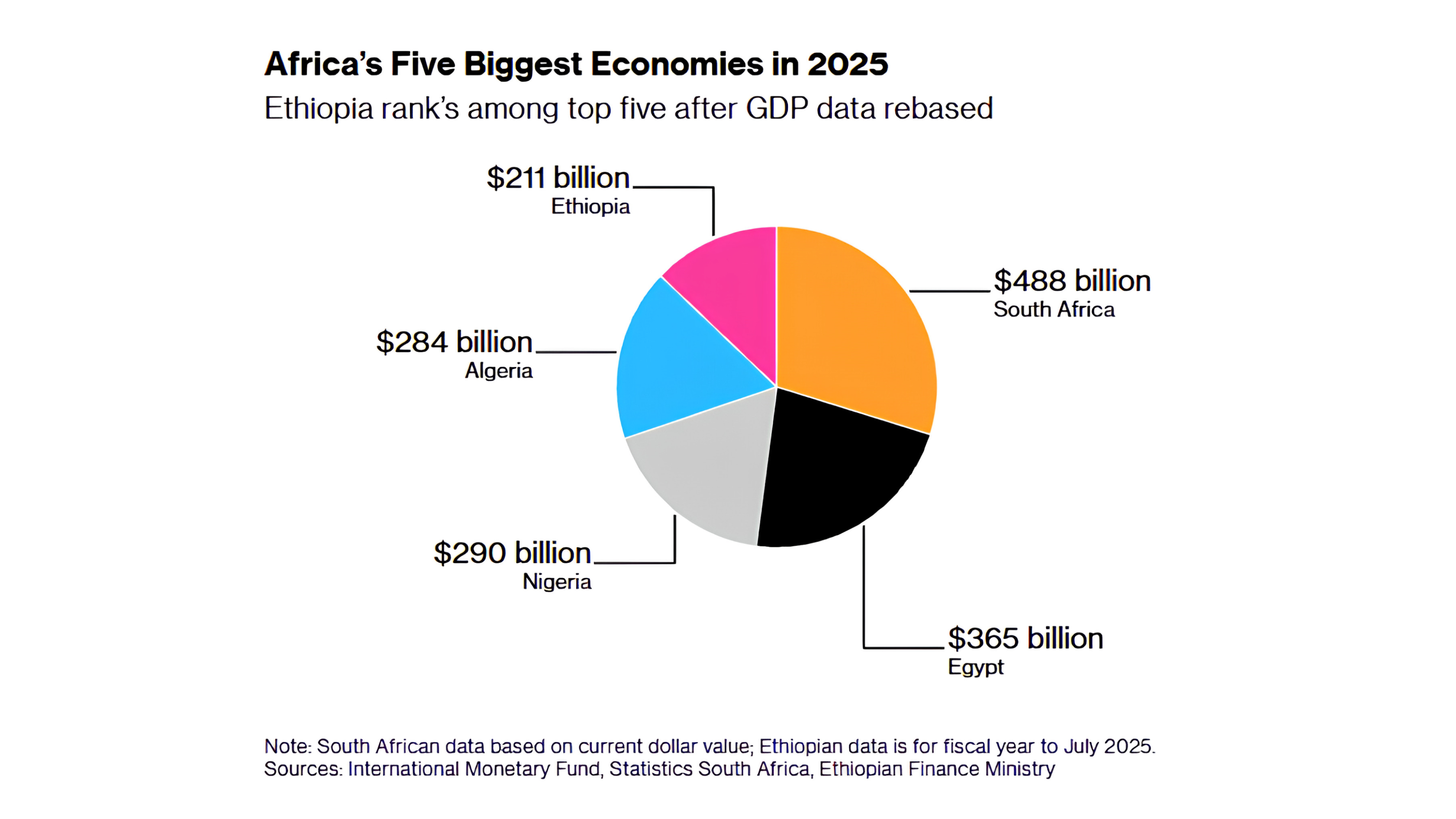
Things are no longer the way they used to be in Ethiopia; not even any mineral exports require them to achieve what has been achieved here. The East African giant did not suddenly undergo such growth for no reason; despite being the fifth largest economy in Africa, it has modified its national accounts to incorporate new sectors like the digital economy.
According to a recent Bloomberg press release published on Nov 5th, Ethiopia used to use 2015-16 as its base year, which “no longer captured the economy’s structural transformation, sectoral expansion and emerging activities such as digital finance and services,” Fitsum said.
The gross domestic product for the fiscal year ending in July stood at $210.7 billion, according to Fitsum Assefa, the country’s finance minister. In the newly adopted 2024-25 base year, GDP stands at $201.4 billion, a 59% increase from the previous estimate.
The second most populated nation in Africa is expecting a 10.2% increase in its economy during the present fiscal year due to several economic reforms that have been undertaken in order to lure foreign investors into the country. The sectors of telecommunications and banking are among those opened up for foreign investments. See my pie chart infograph.
The new figures will automatically bring down the debt to GDP ratios of Ethiopia, making it possible for the country to improve on its debt sustainability indicators as the government of Ethiopia continues restructuring its debts through the G20 Common Framework.
The new data for Ethiopia is derived from the information collected from an agriculture census done recently, surveys and data from state firms and non-profit firms.
From the new data, it is clear that the services sector, which includes transport and Ethiopian Airlines, the largest airline in Africa, accounted for the largest percentage of the economy at 36%, while agriculture and industry accounted for 32% and 30% respectively.
It is important to mention that IMF data does not include the meaning of this emerging economies, and hence at this moment, the International Monetary Fund estimates the GDP of Ethiopia at 127.5B USD.World Economic Outlook (October 2026)


+ There are no comments
Add yours