


Kiambu deserves to operate independently and split from the rural Mt. Kenya region label. To truly actually get somewhere politically, Kiambu must establish itself as a its own political force, one that doesn’t need to ride anyone else’s coattails. By cutting ties with the Mt. Kenya bloc, Kiambu can transcend the the same tired, small-minded arguments that go nowhere and instead adopt an authoritive-thinking, metropolitan-style modern governance model similar to Nairobi’s.
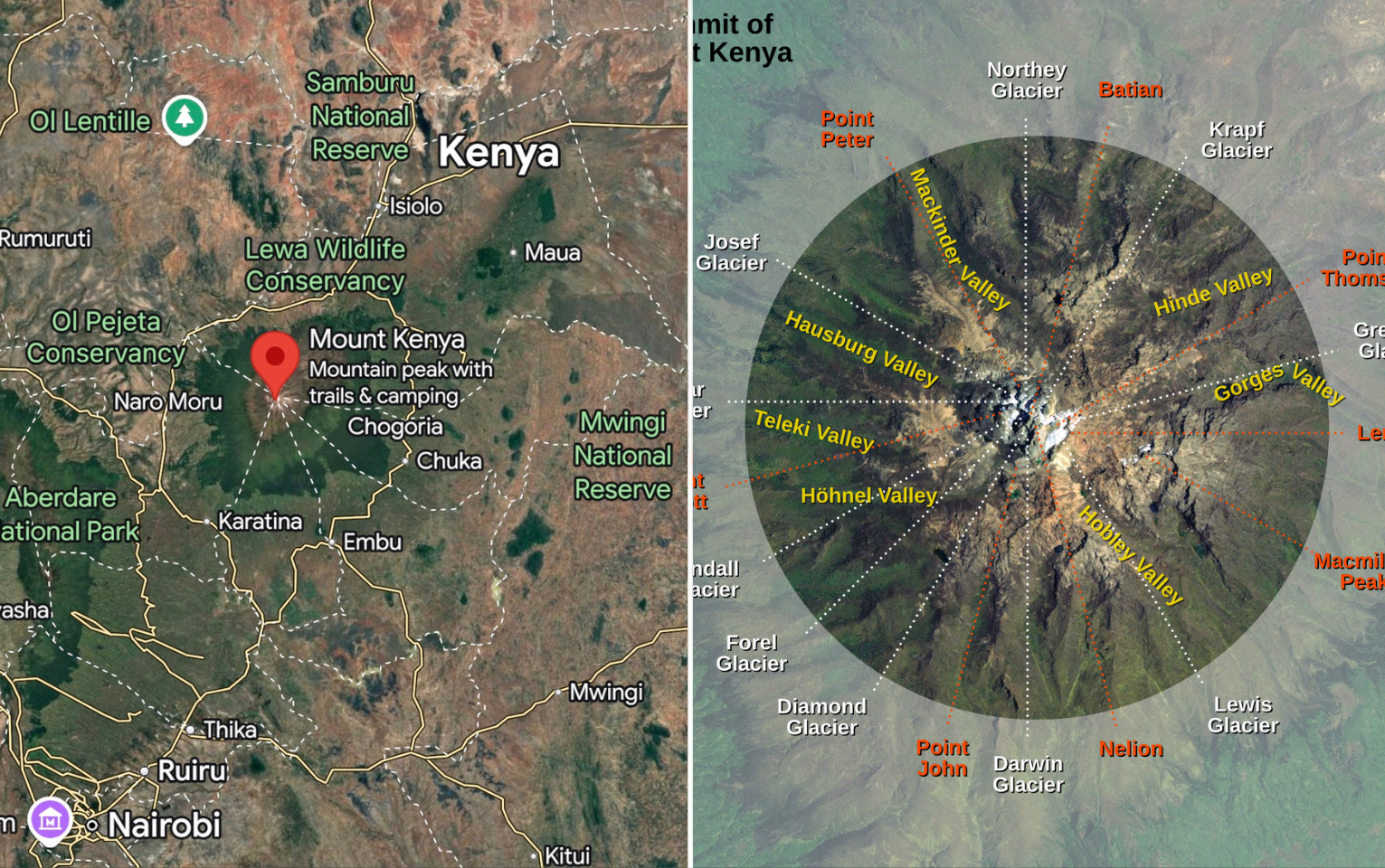
A county with Kiambu’s immense economic scale should not be exploited as a mere pawn for external political agendas. Kiambu commands a massive voting bloc of over 1.5 million votes. Local leaders argue this is more than the votes of the other four Mt. Kenya counties combined (Nyeri, Murang’a, Kirinyaga, and Nyandarua). Political leaders, including National Assembly Majority Leader Kimani Ichung’wah and Deputy President Kithure Kindiki, are spearheading the push for Kiambu County’s independence from the more rural base. They contend that grouping Kiambu with these smaller counties diminishes its political bargaining power. Looking strictly at the geographic rock formation and massif, Mount Kenya is actually surrounded by exactly five counties, and its National Park boundaries are Meru, Embu, Kirinyaga, Nyeri, and Tharaka-Nithi. Those five counties are the real mountain counties.
By shedding this misapplied regional label, Kiambu can finally stand on its own two feet and lean into what it actually is an urban, industrializing county rather than chasing a mountain identity that doesn’t fit, and move beyond the shadows of localized village politics to command the respect its economic stature deserves.
Many counties often grouped into the Mount Kenya region label are always exploited without gaining any financial benefits, only used to drive political agendas that often undermines progress. You can’t also define physical geology by ethnicity; with many different inhabitants, one might as well say the whole country is the Mount Kenya region.
Historically, Mount Kenya has been a crossroads for many ethnolinguistic groups, starting with Southern-Nilotic hunter-gatherers like the Ogiek, as well as Cushitic groups, followed by Nilo-Saharan (Various Nilotic waves), then more recent Bantu migrations along with other nomadic tribes. Mount Kenya hosts various groups both aboriginal and recent migrants.
The first European to report seeing Mount Kenya was Dr Johann Ludwig Krapf, a German missionary, from Kitui, a town 150 km (90 mi) away from the mountain. The sighting was made on 3 December 1849, a year after the first sighting of Mount Kilimanjaro by a European.
It is time to move beyond the shadow of the wider Mt. Kenya region and gain the administrative autonomy required to govern with the same authority and seriousness as Nairobi. This independence is essential to shield Kiambu’s development agenda!


+ There are no comments
Add yours