


The Genetic Journey of Europe’s indigenous peoples is quite fascinating, blending ancient history, cutting-edge science, and cultural evolution.
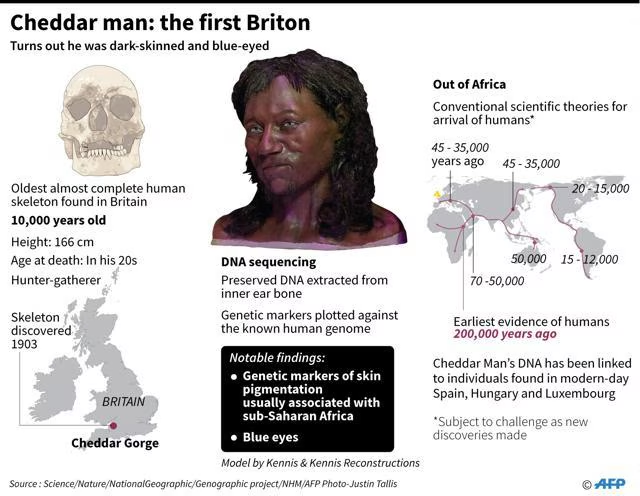
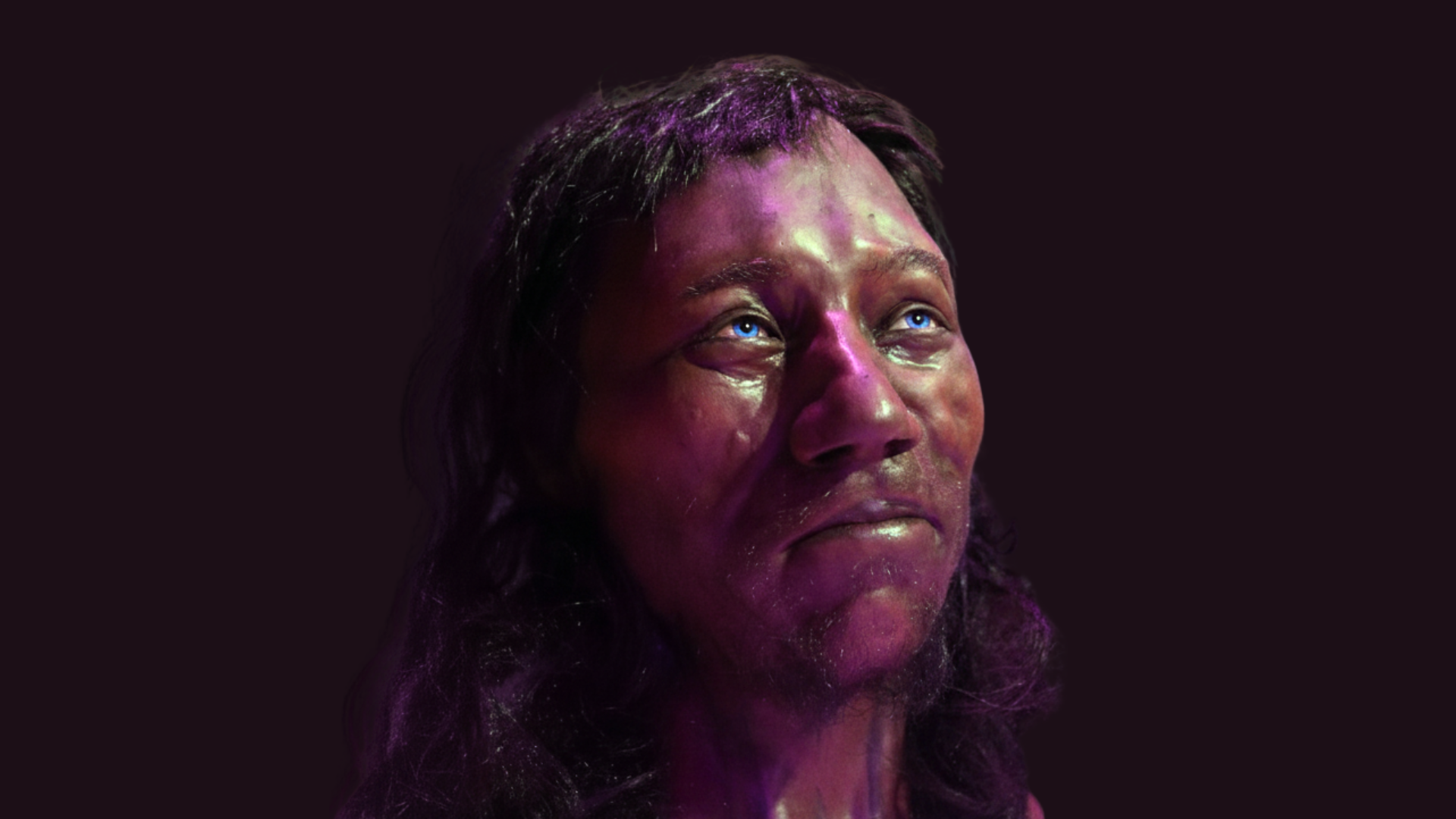
DNA analysis of Cheddar Man, a Mesolithic skeleton found in Britain dating back around 10,000 years, suggests he had dark skin, implying that Indigenous Britons, Celts, and their European cousins were aboriginal. The original people of France were Celts (Gauls) who gradually adopted Latin culture after the Roman conquest of Gaul. Then, the Germanic Franks migrated, conquered Roman Gaul, and adopted Latin culture, which became French. If not for the Yamnaya migration (brown-skinned, black-haired people) and later Roman invasions that mixed (R*edacted) with their ancestors, modern Britons, Germanics, and Celts might still resemble Cheddar Man, or in modern terms, “Black.” The Britons are Celtic refugees from Britain fleeing the Angle and Saxon conquest.
Thus, Breton (the language of Brittany in France) is closely related to the Brythonic Celtic languages Cornish and Welsh than to Irish or Scots Gaelic. The term “Celtic” is often misused interchangeably with Irish or Scottish culture, but it broadly describes a language group over a thousand years old. Celts inhabited most of Western Europe in antiquity, from Ireland to Austria, Spain to Italy, and even central Anatolia, before Rome existed. Irish and Scottish are Gaelic, branching from a wider Celtic culture. Many Europeans surprisingly don`t even know about this.
Modern British and Celtic identities evolved through successive migrations (e.g., Angles, Saxons, Romans), with Breton and Welsh languages retaining closer ties to ancient Brythonic roots, a perspective backed by historical records like those of Herodotus (5th century BC) but often overlooked in popular depictions of Celtic culture.
The Neolithic Revolution and Farmer Migrations
Around 8,000–6,000 years ago, the arrival of Early European Farmers (EEF) from the Near East marked a turning point. These agriculturalists, carrying Anatolian ancestry, brought lighter skin alleles (e.g., SLC24A5 and SLC45A2), which became advantageous as farming lifestyles increased vitamin D deficiency risks in northern climates. A 2014 study (Haak et al.) using ancient DNA showed that EEF ancestry now makes up 30–90% of modern European genomes, depending on the region, with higher proportions in the Mediterranean and lower in the Baltic. This migration largely replaced or mixed with the WHG, though Cheddar Man’s lineage persisted in small traces, particularly in western Europe.
The Yamnaya and the Steppe Influx

The plot thickens around 5,000–4,000 years ago with the Yamnaya culture from the Pontic-Caspian steppe. Genetic studies (e.g., Allentoft et al., 2015) indicate they were a mix of Eastern Hunter-Gatherers (EHG) and Caucasus Hunter-Gatherers (CHG), introducing what’s called “Steppe ancestry” to Europe. This migration, associated with the spread of Indo-European languages, brought further skin-lightening genes and is a major component (up to 50% in some northern Europeans) of modern European DNA. The Yamnaya’s pastoral lifestyle and possible selection for lactose tolerance (a trait linked to the LCT gene) also left a lasting imprint, especially in northern and eastern Europe.
Celtic Connections and Cultural Evolution
The Celts, emerging as a cultural and linguistic group around 1200 BC, likely descended from a mix of indigenous European populations and incoming steppe-related groups. Linguistic evidence, such as the Brythonic languages (Welsh, Cornish, Breton) versus Goidelic (Irish, Scottish Gaelic) —supports a diverse Celtic heritage, with Brythonic roots tracing back to pre-Roman Britain. The Yamnaya influence, combined with later Roman and Germanic migrations (e.g., Angles, Saxons), reshaped these populations, diluting the darker-skinned WHG traits while preserving cultural identities.
Modern Implications
Today, the genetic legacy of these ancient peoples is a mosaic. Northern Europeans often carry significant WHG (up to 50%), EEF (30–50%), and Steppe (20–40%) ancestry, while southern Europeans lean more toward EEF. The dark skin of Cheddar Man is a reminder that Europe’s indigenous roots were far more diverse than popularly imagined, with skin color evolving relatively recently within the last 5,000–8,000 years due to natural selection and migration.
Hope this little history was educational
This migration journey is a reminder of human adaptability and interconnectedness. It overturns simplistic narratives of European homogeneity, revealing a dynamic history of interbreeding, conquest, and cultural exchange. Advances in ancient DNA analysis, such as those from the 2020s (e.g., studies by Reich’s lab), continue to refine our understanding, revealing that every modern European carries genetic echoes of Cheddar Man, the Yamnaya, and the farmers in their ancestry.
“People without knowledge of their past history, origin, and culture are like a tree without roòts.”


+ There are no comments
Add yours